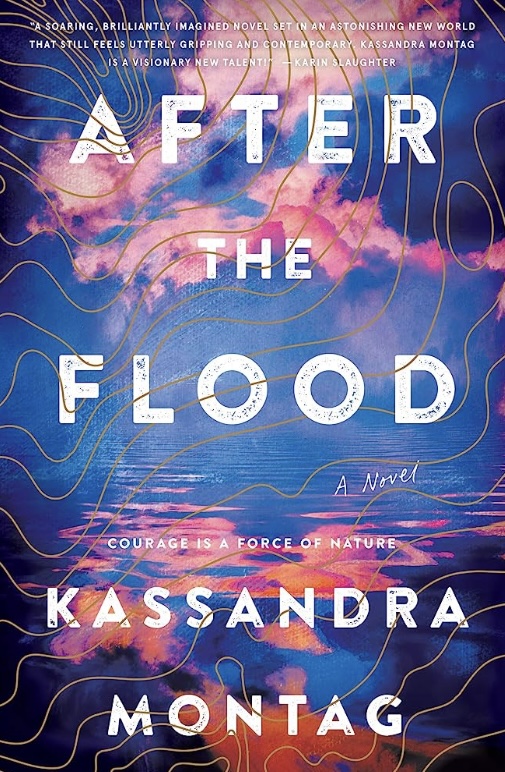
LET’S GET EXCITED ABOUT THIS BOOK!
A little more than a century from now, our world has been transformed. Rising floodwaters have obliterated America’s landscape, leaving nothing but an archipelago of mountaintop colonies surrounded by a deep expanse of open water. Stubbornly independent Myra and her precocious seven-year-old daughter, Pearl, fish from their small boat, visiting dry land only to trade for supplies and information in the few remaining outposts of civilization. For seven years, Myra has grieved the loss of her oldest daughter, Row, who was stolen by her father after a monstrous deluge overtook their home in Nebraska. One day, Myra discovers that Row was seen in a far-off encampment near the Artic Circle. Throwing aside her usual caution, Myra and Pearl embark on a perilous voyage into the icy northern seas, hoping against hope that Row will still be there. But as their journey progresses, Myra must weigh the heart-wrenching decision of whether saving one daughter is worth endangering the other.
Shannon’s Rating — R (5 uses of the f-word and some violence)
LET’S TALK ABOUT THIS BOOK!
Once again, I unknowingly and fortuitously brought the right book on the right vacation! Last week was spent in Island Park, Idaho for an extended family reunion. Most of the time I was on the lake, driving the boat – my happy place! When I wasn’t hanging out on or by the water, I was reading the book, “After the Flood,” by Kassandra Montag.
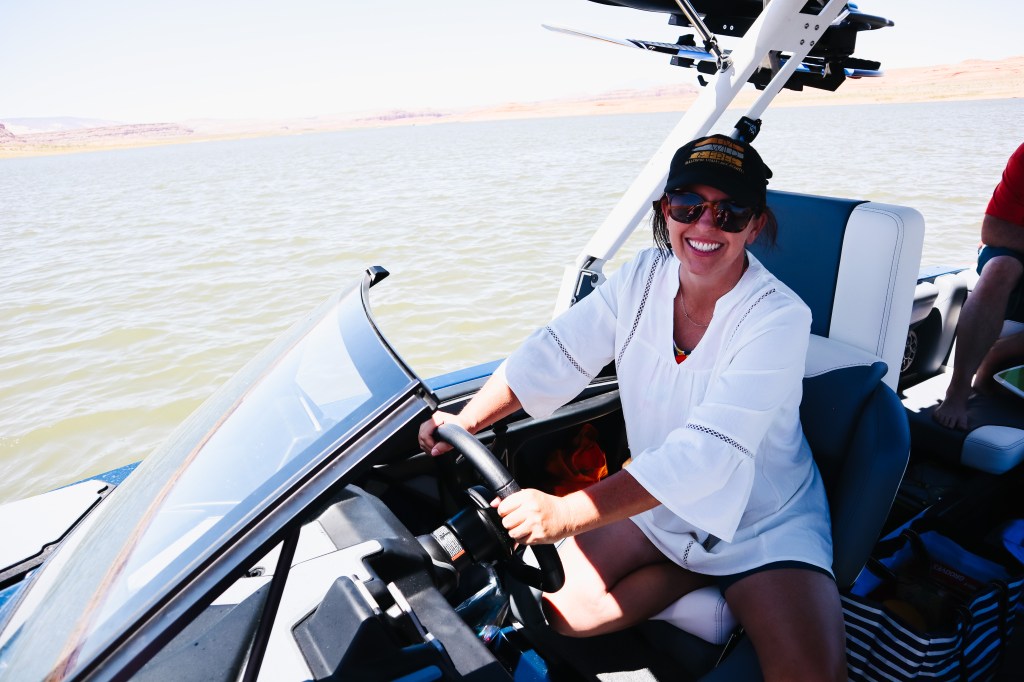
The main theme of this post-apocalyptic book, surprisingly, is motherhood. Myra is a strong, resilient heroine faced with an impossible choice. Can she or should she put one of her daughters at extreme risk in order to possibly save her other daughter? I’ve read that some people dislike Myra and how she is written in the novel. I, for one, found her intriguing. I often found myself pondering her harrowing circumstances and the agonizing decisions she had to make for both of her daughters. The story is told from Myra’s point of view so we, as readers, are right there with her for all of her decision-making processes. I can see why some people were turned off by this. Maybe they wanted a more plot-driven action story instead of being in the mind of a mother, desperately trying to protect her daughters. Throughout the novel we witness Myra struggle, despair, lie, cheat, bargain and even kill to save her daughters. Would I do any differently in such extreme circumstances? These were the thoughts I pondered as I pulled skiers and surfers around the lake. I imagined myself as Myra, out on the water. Obviously, it’s not at all the same. I was with my children on a boat, having fun. Myra was with her child on a boat, trying to survive. But still. Readers will read and readers will imagine. It can’t be helped!
One reviewer on Amazon said this about Myra… “Is it possible to despise a character so much that you end up loving her? That’s how I felt about Myra. She was a difficult character to love because of her flaws, but maybe that’s why I loved her in the end.”
I, too, loved and admired Myra BECAUSE of her flaws. She made some questionable decisions along the journey to find her daughter. But to me, they were justifiable and understandable. I can’t say I would have done anything differently than Myra. Would I sail across an entire submerged continent to find my daughter? I sure as heck would try. Although I’m certain I wouldn’t have done it as well as Myra. Can I fish? No. Can I sail? No. Can I fight with knives? No. Can I navigate the ocean? No. Basically, I have no survival skills that would enable me to keep my children alive in a post-apocalyptic, flooded world. Sorry kiddos.
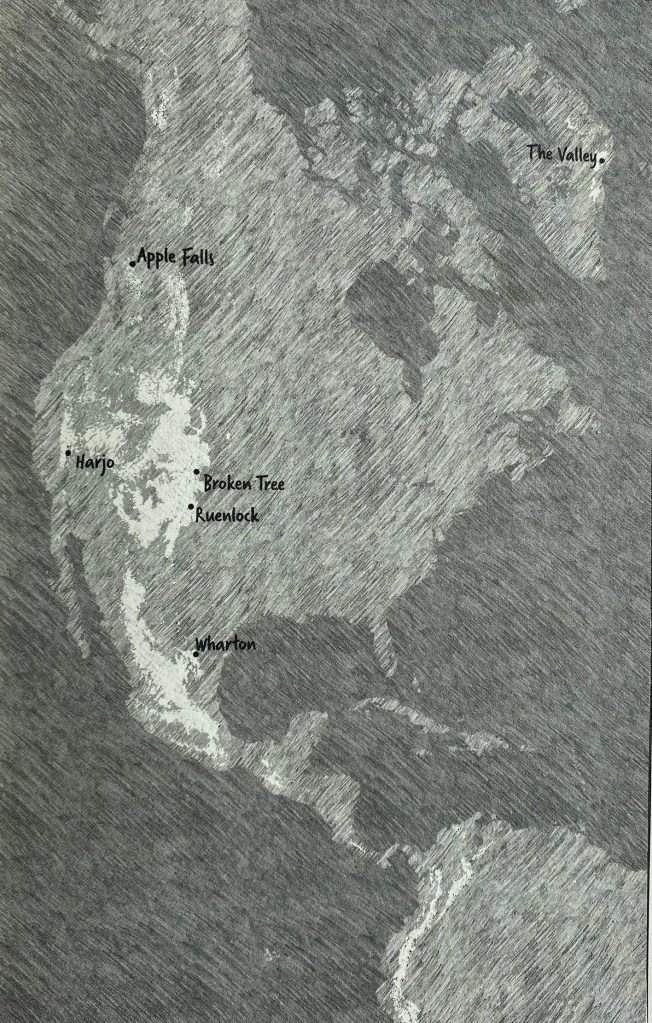
If you’re curious about how Kassandra Montag came up with the idea for this novel, here’s a bit of what she’s said…
During my mid-twenties I lived in the Netherlands for a year. After I came home to Nebraska, I became pregnant and began having recurring nightmares. The nightmare was of a massive wave of water coming across the prairie, as though I had brought the ocean from the coast of the Netherlands into the middle of the U.S. It looked like a tsunami had dropped in the middle of the Great Plains. The dream of a global flood and changed landscape felt like a transparent metaphor for my anxieties about becoming a mother. Soon after I had the nightmare of a global flood, I had an image in my mind’s eye of a mother on a boat with her young daughter. In considering the image, I saw that she was someone torn between two choices: protecting her young daughter with her, or rescuing a second daughter, who was in danger miles away.
I’m always on the hunt for unique stories and characters. “After the Flood” delivered on both of these counts. I don’t know if I’ve ever encountered a heroine quite like Myra before. I loved her. I really did. Flaws and all. I think I’m a sucker for strong, imperfect fictional heroes. One reason I loved Myra was because she reminded me of Rick Grimes in the “Walking Dead.” Time after time, Rick made morally questionable decisions to protect his children from both zombies and evil humans. Was he judged sometimes for these decisions? Sure. Was Myra sometimes judged for the decisions she made to save her children? Yep. But that’s the fascinating nature of these types of heroes and why I’m mildly obsessed with them.

Now someone really needs to make “After the Flood” into a movie for me. I need to see Myra brought to life. Hmm…I wonder who would be the best actor to play her? I guess this is the question I’ll be pondering next time I’m out driving the boat around a lake!

 Shannon's Library
Leave a reply to Lisa Murdock Cancel reply