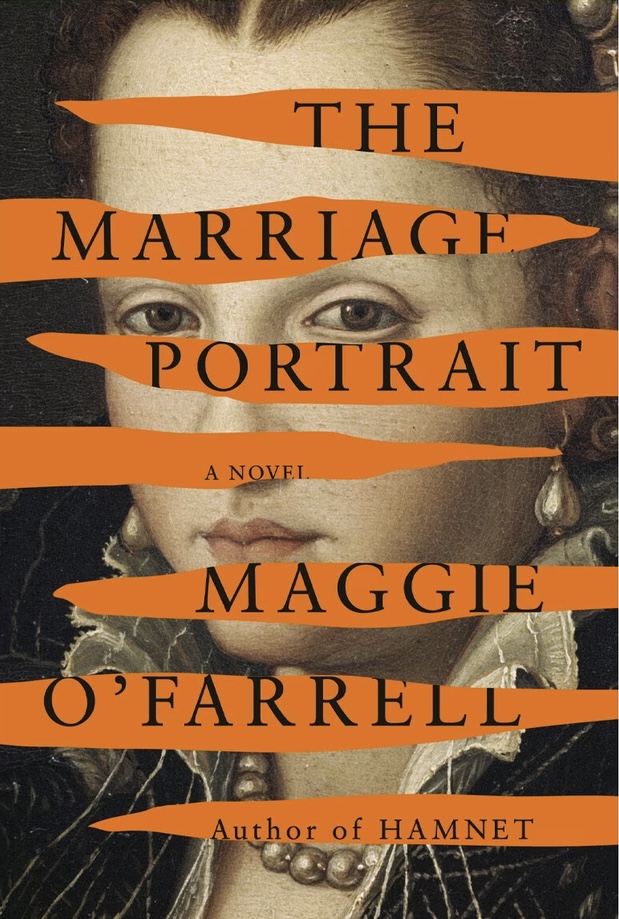
LET’S GET EXCITED ABOUT THIS BOOK!
In 1550’s Florence, Lucrezia di Cosimo de’Medici, at the age of 15, is forced by her parents to marry Alfonzo II d’Este, Duke of Ferrara – thus merging two dynasties. Lucrezia must leave the safety of her family’s palazzo and travel to an unfamiliar court with an unpredictable new husband. Is Alfonzo the playful, caring man he appeared to be before their wedding or the ruthless politician before whom even his sisters seem to tremble?
As Lucrezia sits in constricting finery for a painting intended to preserve her image for centuries to come, one thing becomes worryingly clear. In the court’s eyes, she has one duty: to provide the heir who will shore up the future of the Ferrarese dynasty. Until then, for all her rank and nobility, the new duchess’s future hangs entirely in the balance.
Shannon’s Rating — PG-13 (Keep in mind, this is a rather mature PG-13. There are difficult sexual themes that would not be suitable for young readers.)
LET’S TALK ABOUT THIS BOOK!
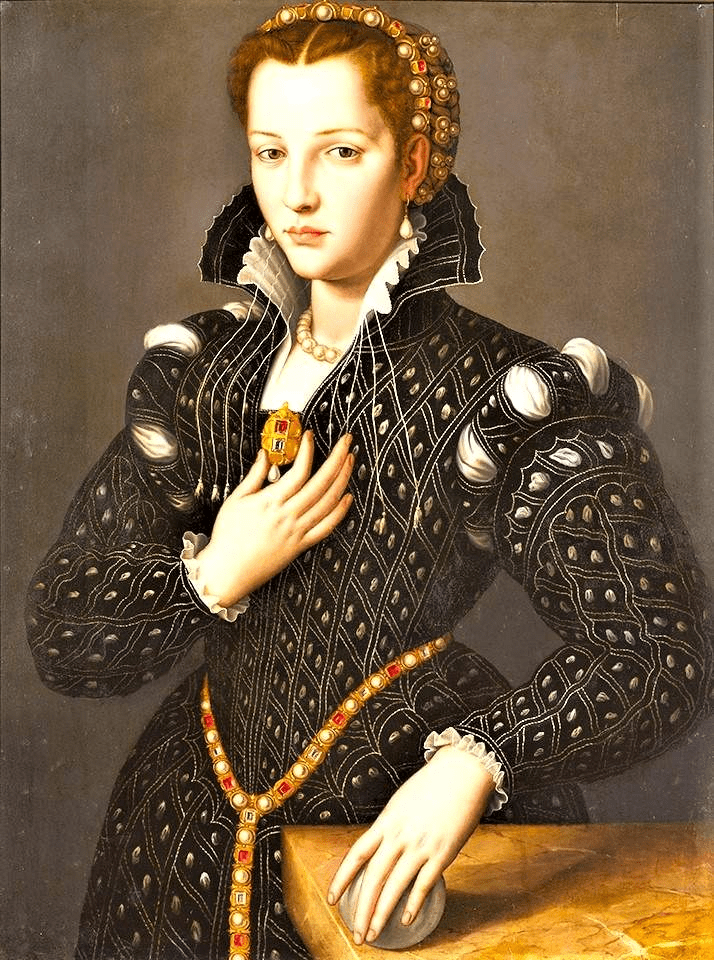
Historical details are sparse about the short life of the real Lucrezia de’ Medici. We know she was born on February 14, 1545, and died on April 21, 1561. She came from a loving family with 11 siblings. She was better educated than most girls at the time and was raised in a beautiful palazzo. When her older sister unexpectedly died, Lucrezia was forced to marry her fiancé, Alfonso, the Duke of Ferrera. A year later, Lucrezia died of a fever. Rumors speculated, however, that she was poisoned by her husband. No one knows what really happened. But her early death, and her intriguing portrait, inspired Robert Browning in 1842 to compose a poem entitled, “My Last Duchess.”
The poem imagines the Duke of Ferrera giving a tour of his home to his soon-to-be new father-in-law. He draws back the curtain in one of the rooms to reveal a stunning portrait of his previous wife, Lucrezia. The poem starts with the Duke saying…
That’s my last Duchess painted on the wall,
Looking as if she were alive.
The poem continues with the Duke describing all the ways his first wife failed him. She was “too glad.” Too many things made her happy when only “her husband’s presence” should have made her such. Her happiness dwindled when the Duke started to assert his dominance over his young wife. “I gave commands; then all smiles stopped together.” As the rather long poem goes on, the Duke reveals his true character and anger towards Lucrezia. He eventually hints that he had something to do with her death. He creepily keeps her painting hidden behind a curtain that only he is allowed to draw back – thus ensuring she smiles only for him.
Maggie O’Farrell describes how this poem, and this painting, became the inspiration for her novel, “The Marriage Portrait.”
In February 2020, I was thinking about what to write next, and in the meantime, I’d been re-reading Robert Browning. I’d known “My Last Duchess” was based on real events, so I plugged the name into my phone, and within a few minutes I’d downloaded Lucrezia’s portrait. The jewels, the headdress, her nervous eyes – as soon as I saw her, I knew she was my next book. People in Renaissance paintings tend to look expressionless, but not Lucrezia.
I love it when authors are inspired by real life events, writings, or paintings and create fictionalized accounts of how these events or items came to be. Tracy Chevalier did a masterful job of this with her novel, “The Girl with a Pearl Earring.” (One of my very favorites, by the way!) And now Maggie O’Farrell has succeeded in this endeavor as well.
Maggie O’Farrell is quickly becoming one of my most-admired authors. Her novel, “Hamnet,” is near and dear to my heart. It’s so near and dear, I was apprehensive when I heard she had a new book coming out. I’ve been disappointed so many times by authors who write a much beloved book and then follow it up with something I don’t love. I SO didn’t want this to happen with Maggie O’Farrell. Luckily, “The Marriage Portrait” did not disappoint! I think O’Farrell’s writing is genius. It’s beautiful in a way that often stuns me and speaks right to my soul.
At one point in the novel, Lucrezia faces a terrifying experience. Instead of giving into her fears, she reaches for the courage that lives deep inside of her.
Lucrezia feels, within her, the rise of what she thinks of as her spirit – the unfettered part of herself to which no one, not even she, has access. It lives somewhere deep inside her, mostly hibernating, until called into action. Then it might uncurl, crawl out into the light, blinking, bristling, furling its filthy fists and opening its jagged red mouth. In this black and unfamiliar room, Lucrezia feels it, senses it stirring, raising its head and starting to howl. She lifts her chin. She is not afraid, no, she is not. A beast – muscled and brave – lives within her.
Oh, how I loved how this book was written. Yes, it dealt with some hard and brutal issues. But within the hard, was beautifully written hope. Lucrezia will live in my heart for a long time. I talked recently on my Instagram page about strong book heroines. Lucrezia was an innocent young girl living in a time of overwhelming repression of women. Yet her quiet strength was absolutely inspiring. She will forever be one of my favorite female protagonists.
Also, if you didn’t notice or pay attention to the orange stripes on the book cover – please take note. Then read the book and see how that imagery plays into the story. I loved it so, so much! And if you want to talk to me about that particular symbolism prevalent in the book, reach out to me. I’m itching to discuss it further!

 Shannon's Library
Leave a reply to Pam Carr Cancel reply