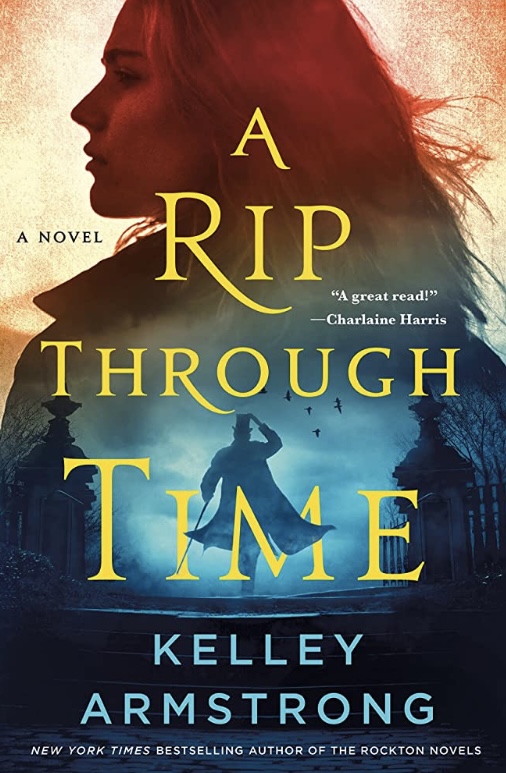
LET’S GET EXCITED ABOUT THIS BOOK!
On May 20, 2019, homicide detective Mallory Atkinson is in Edinburgh to be with her dying grandmother. While jogging, Mallory hears a woman crying for help and goes into a dark alley where she is also attacked. On May 20, 1869, a housemaid named, Catriona Mitchell, is discovered in an alley where she has been left for dead. It’s the exact spot where Mallory was attacked 150 years later. Mallory wakes up in Catriona’s body in 1869 and must quickly adjust to being a housemaid to an undertaker in Victorian Scotland. This undertaker, Dr. Gray, is consulting on a strangulation case eerily similar to Mallory’s attack. Her only hope is that by catching this murderer, it will lead her back to her modern life…before it is too late.
Shannon’s Rating — PG-13
LET’S TALK ABOUT THIS BOOK!
Are you a fan of TV crime shows? I am. Sort of. Let’s just say I go through phases. A couple of years ago I got really into the show, Criminal Minds. I quickly discovered I couldn’t watch this one right before bed. In fact, I could only watch it while running on the treadmill. (Was I instinctively training myself to run away from serial killers? Maybe.) But I thoroughly enjoy the inherent mystery in these types of shows. Watching the detectives sort through all the evidence, meet all the suspects, and heroically narrow their way down to the killer – all in one hour…fascinating!
In Kelley Armstrong’s book “A Rip Through Time” Mallory Atkinson, a homicide detective, is thrust back in time to 1869. As she scrambles to help solve a murder, she quickly realizes the frustrating limitations detectives face in a world without modern forensic science. Mallory wonders how anyone can possibly solve crimes, especially murders, without the help of fingerprinting, ballistic reports, DNA analysis etc.
Forensic science can trace its beginnings back to the ancient world. One of the first instances of a forensic investigation is found in ancient Chinese lore. After a peasant had been murdered, the village lawman used the slash wounds on the victim’s body to narrow down the culprit. He summoned together the three farmers who worked the fields closest to the scene of the crime and had them place their scythes on the ground before them. As the lawman questioned them over the course of several hours, flies began to collect on one particular scythe. While the scythe had been wiped clean, there were traces of blood left behind that attracted the insects. Although this story wouldn’t hold up as hard evidence in a court of law today, the foundation of this story is what lies at the center of many modern forensic investigations.
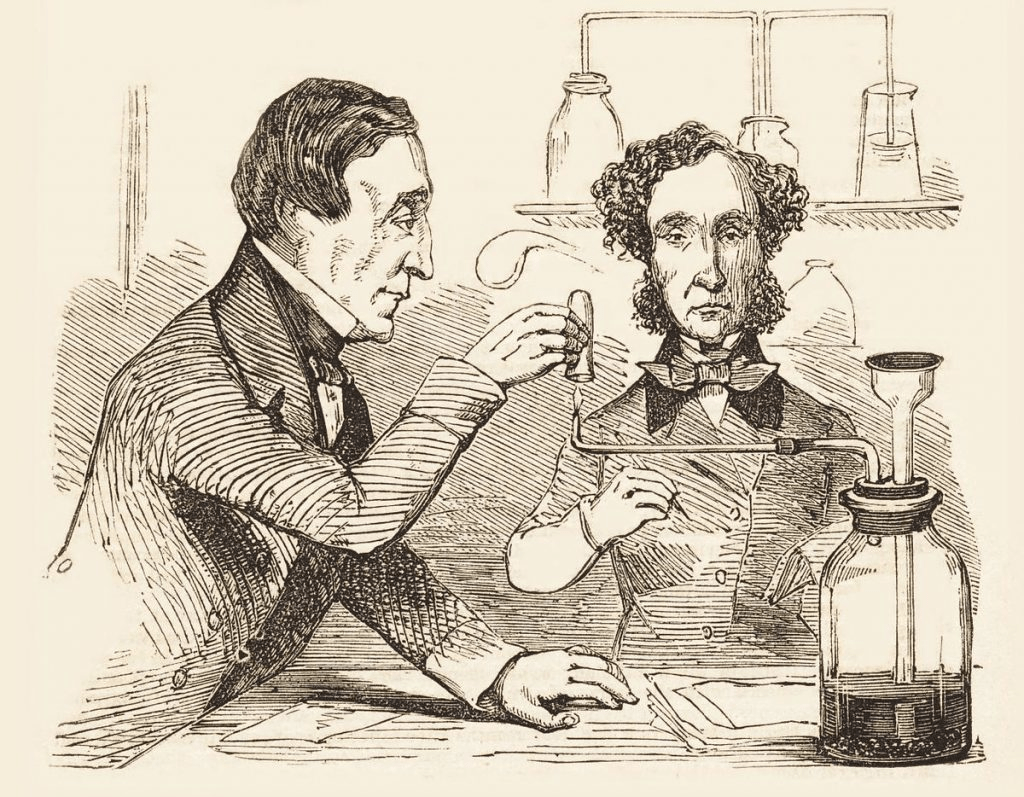
We often take for granted all the forensic science in use today and it’s hard to believe that it’s a rather recent phenomenon. Fingerprint analysis began as early as the 1880’s but it wasn’t until 1910 that it was first used in a murder trial. Following the break-in and murder of a man in his Chicago home, another man was stopped a half-mile away wearing a bloodied coat and carrying a revolver. But it was what he left behind that would be the focal point of his trial – a fingerprint from a freshly painted railing that the assailant used to hoist himself through a window into the home. In the 1970’s scientists developed a method of detecting gunshot residue through electron microscopes. But the biggest breakthrough in forensic science didn’t come until the mid 1980’s when crime labs were finally able to complete DNA matching. This method was used for the first time in a criminal case in 1986 during an investigation of the murder of two women. Samples of blood and saliva were taken from over 400 local men and only one match returned. The criminal was arrested, and the former suspect was fully exonerated.
So… if you’re a fan of true-crime podcasts or crime-solving television shows and movies… you might want to give “A Rip Through Time” a try!
I’ve read a lot of murder mystery books. I’ve read a lot of time travel books. I’ve read a lot of historical fiction books. In “A Rip Through Time,” Kelley Armstrong combines all three of these genres into one book! I thought it was such a unique concept to have a strong, intelligent, female detective as our time-displaced protagonist. After waking up in 1896, Mallory immediately finds herself struggling with both gender and socio-economic biases – a completely unfamiliar territory for a modern woman. My favorite part of the story was watching her learn how to solve crimes without the use of our modern advancements, all while overcoming the cultural biases towards poor, young women of the time.
(Small spoiler ahead…but one that I think you might want to know…)
And now, just a quick note that I wish I had known before starting this book. “A Rip Through Time” is the first book in a new series. I didn’t know that. So, the whole time I’m reading, I’m anxiously awaiting to find out how Mallory gets back to her own time. Turns out, this issue isn’t resolved in this first book. She stays in 1896 – presumably to continue solving murders and eventually working out how to get back home. If I had known this going in, I wouldn’t have been so frustrated when I got to the end of the book. So, you’re welcome. Hopefully that saves you all from the same frustration. Now you get to just enjoy the book, knowing it’s going to be an ongoing series.
Incidentally, the second book in this series, “The Poisoner’s Ring” releases May 23, 2023. I’m excited to continue Mallory’s story and will definitely be picking the next one up!


 Shannon's Library
Leave a comment